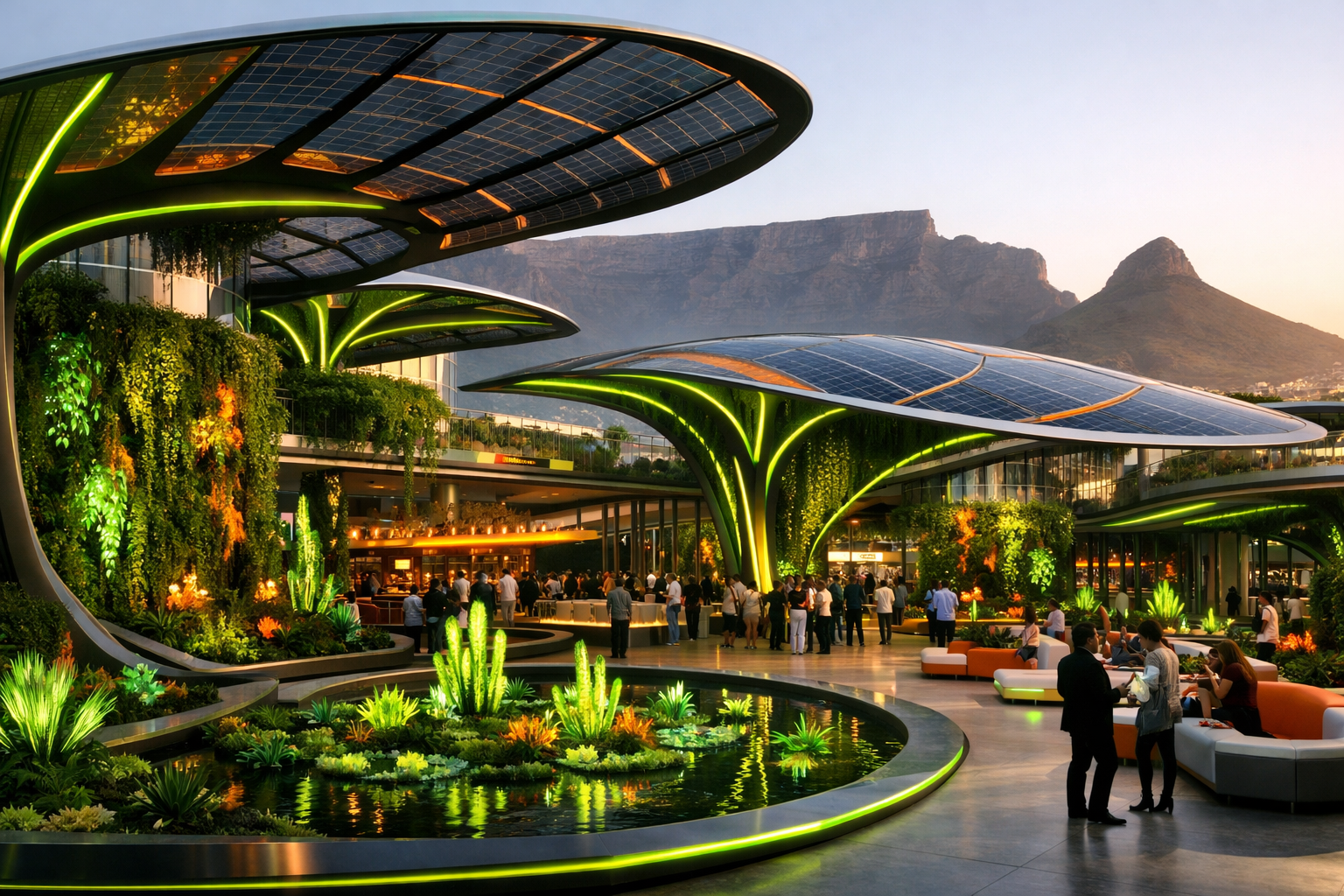
Greener Gatherings
Sustainability and Eco-Conscious Trends in South Africa (2025-2026)
Introduction
The global conversation around sustainability has reached a critical pitch, and the events industry, long recognized for its significant environmental footprint, is undergoing a profound transformation. In 2025, the shift towards green events in South Africa evolved from a niche interest into a core business imperative. Driven by generational expectations, regulatory pressures, and a growing sense of corporate responsibility, event organizers are no longer asking if they should be sustainable, but how. This article examines the key sustainability trends that defined the South African events landscape in 2025, analyzes their impact, and projects the trajectory for eco-conscious events in 2026.
Key Developments in 2025: From Mitigation to Regeneration
In 2025, the approach to green events matured from simple mitigation efforts, like reducing waste, to a more holistic and impactful strategy. The focus is now on creating a positive legacy, a concept known as regeneration. This involves not just minimizing harm but actively contributing to environmental and social well-being.
Several key trends have underpinned this evolution:
-
The Rise of Net-Zero and Circularity: The most ambitious events are now aiming for net-zero carbon emissions or even carbon-negative outcomes. This involves a meticulous process of measuring carbon output, reducing emissions through renewable energy and efficient logistics, and offsetting the remainder through verified programs [2]. The principle of a circular economy has also become central, with a push to eliminate single-use items entirely. This was evident in trade shows beginning to require exhibitors to abandon single-use booths in favor of modular, reusable designs [2].
-
Data-Driven Sustainability: The mantra "you can't manage what you don't measure" has taken firm hold. Robust data collection has become fundamental. Partnerships like the one between isla and IMEX to create an Event Carbon Measurement Starter Pack signify the industry's commitment to establishing baseline measurements to track progress and identify the most impactful areas for reduction [1].
-
Generational Influence: Millennials and Gen Z, who now represent the largest demographic for many events, are making attendance and purchasing decisions based on a brand's sustainability and social impact values. This has created immense pressure on organizers to move beyond superficial claims ("greenwashing") and demonstrate authentic, transparent commitment [2].
The South African Context
South Africa has firmly established itself as a leader in the continent's sustainability conversation, hosting a remarkable number of high-profile green events in 2025. Conferences such as Sustainability Week Africa in Cape Town, the 5th Annual Sustainability Summit Africa in Johannesburg, and the B Lab Africa Summit 2025 have drawn hundreds of international leaders, cementing the nation's role as a hub for sustainability dialogue [1].
This leadership is also reflected in practical initiatives:
| Initiative | Description | Impact |
|---|---|---|
| Venue Certification | Venues like the CSIR International Convention Centre are providing guidebooks for green event implementation. Cape Town boasts numerous venues with energy-efficient lighting, water-wise landscaping, and robust waste reduction programs. [1] | Provides organizers with a clear roadmap and certified partners for hosting sustainable events. |
| Supply Chain Focus | A growing emphasis on supply chain traceability and ethical sourcing, with pressure to verify the sustainability claims of vendors and suppliers. [2] | Reduces the risk of greenwashing and ensures that the entire event ecosystem adheres to higher standards. |
| Commitment to Legacy | Major future events, such as the World Congress on Public Health (WCPH) 2026 in Cape Town, have already committed to ambitious sustainability goals, including zero single-use plastics and prioritizing local, eco-friendly sourcing. [1] | Sets a high benchmark for future events and demonstrates a long-term commitment to positive impact. |
"Sustainability is no longer an option—it is a necessity. Companies are under growing pressure to adopt eco-conscious event strategies and reduce their carbon footprint." - Honeycomb Strategies [2]
The Road Ahead: Predictions for 2026
Looking to 2026, the momentum of 2025 is set to build, with sustainability becoming even more deeply embedded into the fabric of event planning.
Predictions for 2026:
- Regenerative Events as the New Standard: The focus will continue to shift from merely sustainable (neutral impact) to regenerative (positive impact). This will involve events actively investing in local community projects, biodiversity restoration, and cultural preservation as part of their core mission.
- Supply Chain Transparency Becomes Non-Negotiable: With advanced tracking tools and increasing stakeholder demand, organizers will be expected to provide full transparency into the environmental and ethical credentials of their entire supply chain, from catering to technology vendors.
- The Integration of AI in Sustainability: AI will be used more extensively to optimize sustainability efforts. This includes AI-powered waste reduction systems, optimizing logistics to minimize carbon footprints, and providing real-time data dashboards that track environmental performance during an event.
Summary
- Beyond 'Green': In 2025, the event industry's approach to sustainability matured from basic waste reduction to comprehensive strategies targeting net-zero emissions and circular economy principles.
- South Africa Leads the Charge: Through hosting major international sustainability conferences and pioneering green venue initiatives, South Africa has become a key player in the global movement for eco-conscious events.
- Data and Transparency are Crucial: Measurement has become a fundamental practice, with data being used to prove impact, avoid greenwashing, and meet the expectations of a new generation of attendees.
- The Future is Regenerative: For 2026, the goal will be to create events that not only minimize their negative impact but leave a lasting positive legacy on the environment and local communities.
References
[1] MPI. (2025, January 27). Sustainability event trends for 2025: Part 1. Retrieved from https://www.mpi.org/media/blog/articles/article/sustainability-event-trends-for-2025--part-1
[2] TSNN. (2025, July 29). State of the Sustainable Events Industry: Summer 2025 Trends & Risks Report. Retrieved from https://www.tsnn.com/sustainability/state-of-the-sustainable-events-industry-summer-2025-trends-risks-report