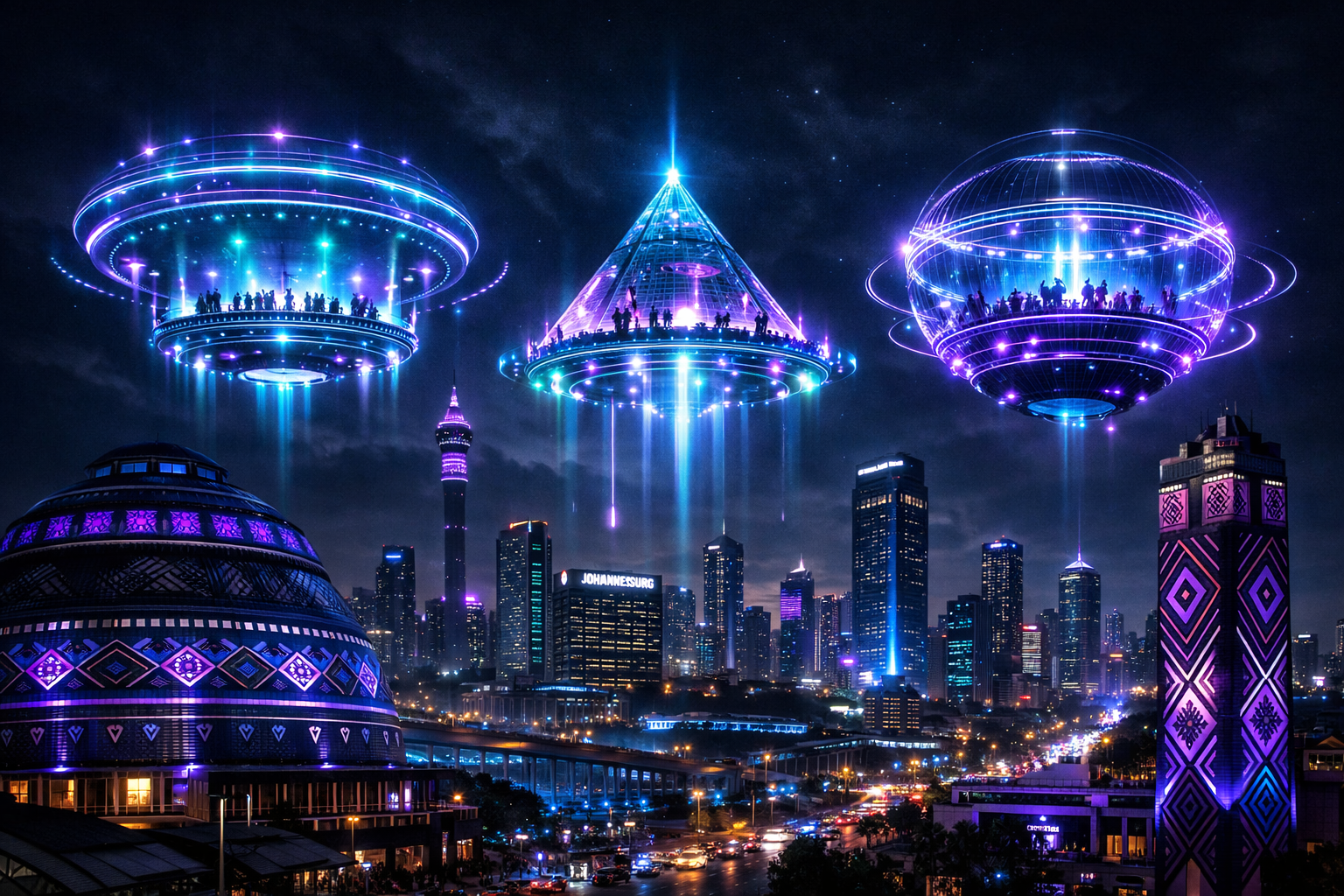
The Digital Frontier
Hybrid and Virtual Event Innovations in South Africa (2025-2026)
Introduction
What began as a temporary solution during a global crisis has firmly established itself as a cornerstone of modern communication. In 2025, hybrid and virtual events moved far beyond simple webcasts, evolving into sophisticated, immersive, and highly engaging experiences. For the South African events industry, this digital frontier has unlocked unprecedented opportunities for accessibility, reach, and innovation. This article delves into the key hybrid and virtual event trends of 2025, analyzes their specific application within South Africa, and forecasts the next wave of digital event evolution for 2026.
Key Developments in 2025: The Immersive and Intelligent Virtual Venue
The year 2025 was characterized by a determined push to make the virtual attendee a first-class participant. The industry has shifted its focus from merely broadcasting content to creating rich, interactive digital environments that rival their physical counterparts.
Key innovations that defined the year include:
- AI-Powered Personalization: Artificial Intelligence has become the engine of engagement. In 2025, AI was used to deliver customized content suggestions, facilitate intelligent networking matches between virtual attendees, and provide instant support via smart chatbots [1].
- Immersive 3D Environments: The flat, 2D interface of early virtual event platforms gave way to immersive 3D worlds. Virtual reality (VR) and augmented reality (AR) have been used to create interactive trade show booths, lifelike product demonstrations, and entire digital campuses, leading to deeper and more memorable engagement [1].
- Hybrid as the New Normal: The hybrid model, blending in-person and virtual audiences, became the default for many organizers. This approach offers the best of both worlds: the energy of a live event and the expanded reach and accessibility of a virtual one. It also aligns with growing sustainability goals by reducing the carbon footprint associated with travel [1].
- Data-Driven Experience Design: Advanced analytics have empowered organizers to understand virtual attendee behavior with incredible precision. By tracking metrics like session duration, engagement rates, and networking patterns, planners can now make data-informed decisions to continuously improve the event experience [1].
| Innovation | Description | Impact on Virtual Experience |
|---|---|---|
| AI Integration | Using AI for personalized content, networking, and support. | Creates a more relevant, tailored, and satisfying journey for each attendee. |
| Immersive Worlds | Building 3D, VR, and AR environments for the event. | Transforms passive viewing into active participation and exploration. |
| Hybrid Model | Seamlessly integrating physical and digital audiences. | Expands audience reach globally and enhances accessibility for all. |
| Advanced Analytics | Tracking detailed engagement data from virtual participants. | Enables data-driven improvements and proves ROI for sponsors and stakeholders. |
The South African Context: Engineering the VIP Virtual Experience
South African event professionals have been particularly adept at innovating within the hybrid space, focusing intently on ensuring the virtual audience feels just as valued as those attending in person. Local experts emphasize that virtual attendees require more than just a stable live stream; they need to feel a true sense of belonging and engagement.
Astral Studios, a South African production company, outlines a comprehensive strategy for elevating the virtual experience, which includes [2]:
- Prioritizing Interactivity: Using tools like live polls, Q&A sessions, and emoji reactions to foster active participation.
- Gamification: Incorporating leaderboards, quizzes, and virtual scavenger hunts to make the experience more dynamic and fun.
- Fostering Virtual Networking: Creating dedicated virtual breakout rooms, one-on-one video chat functions, and discussion boards to facilitate personal connections.
- Investing in High-Quality Production: Ensuring professional AV setups and reliable streaming platforms to deliver a flawless technical experience.
"Virtual attendees aren’t just looking for a live stream. They need interactivity to help them feel engaged, with a sense of belonging." - Astral Studios, South Africa [2]
This focus on production quality and deliberate engagement design demonstrates a sophisticated understanding of the hybrid model. The goal in the South African market is clear: every virtual attendee should have a VIP experience.
The Road Ahead: Predictions for 2026
As technology continues to advance, the line between the physical and digital event experience will blur even further. For 2026, we can anticipate the following developments:
Predictions for 2026:
- The Rise of the Digital Twin: Events will increasingly feature a "digital twin"—a persistent virtual world that exists before, during, and after the physical event, allowing for year-round community engagement.
- Holographic Presence: As 5G infrastructure improves across South Africa, we may see the first mainstream use of holographic technology to beam remote speakers onto physical stages in real-time, creating a truly "phygital" experience.
- Neuro-Inclusive Virtual Design: Virtual platforms will become more adaptable, allowing users to customize their sensory experience (e.g., adjusting color contrast, reducing motion) to accommodate neurodiverse needs.
Summary
- Virtual is Vital: In 2025, virtual components ceased to be an afterthought and became integral, immersive experiences driven by AI and 3D technology.
- South Africa Prioritizes Engagement: Local organizers are leading the way in creating "VIP" experiences for virtual attendees through gamification, networking, and high-quality production.
- Hybrid is Here to Stay: The hybrid model has proven its value in extending reach and accessibility while supporting sustainability goals.
- The Future is Phygital: For 2026, expect the boundaries between physical and digital to dissolve further with the adoption of digital twins and holographic technology.
References
[1] Chati. (2025, October 20). Virtual Event Trends Shaping 2025. Retrieved from https://chati.com/virtual-event-trends-shaping-2025/
[2] Astral Studios. (n.d.). Improving the Virtual Attendee Experience in Hybrid Events. Retrieved from https://www.astralstudios.co.za/improving-the-virtual-attendee-experience-in-hybrid-events/